Holy Grail QRP Set
#qrp #design #modular #transceiver #ham #radio #holy-grail
Reading time: 4 minutesGoing by the title, please note that this is meant to be a holy grail ask rather than a technically feasible specification, and is a result of my rather limited foray into the world of amateur radio.
Having used both the QMX and the zBitx, along with the sBitx, I have been thinking up my requirements for my holy-grail set. I tend to use these radios on occasional field trips which are combined with mQTH trips, so they tend to be QRP, back-pack friendly and flight-safe.
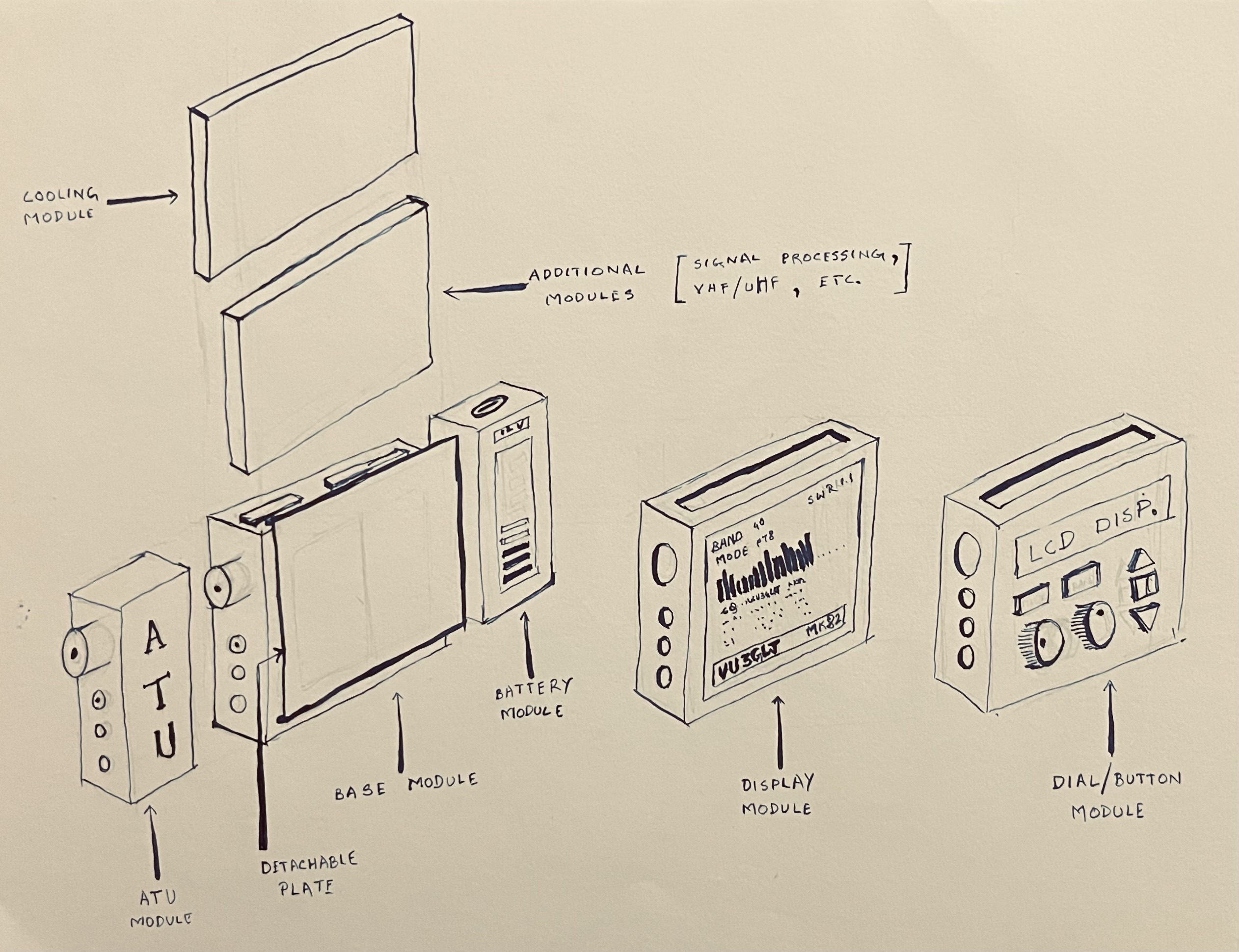
Figure 1: Quick & Dirty diagram for a modular QRP Transceiver
Design Considerations
Here are a few design considerations that I would love the radio to follow:
- Open-source design for hardware and software
- Modular in design so that people can then pick and choose1 ala Phonebloks, Framework Laptop2, Fairphone
- Use easy-to source components (preferably open-source as well)3
- OTOB experience along with a DIY version
- Power draw is standard 5V/9V/12V (so that there is no need for additional convertors when using modern power-banks)4
- Should NOT heat up!5
- Provide simple user-interface6
- Should NOT have spurs and leakages!7
- Easy and light enough to hold in a single hand and allow operation with the other hand
Set of features for the radio
And now, what are the features for the radio itself:
- QRP radio set with a capacity of upto 10W based on modes (5W works perfectly fine for me)
- Base module:
- SSB and Digital (CW included obviously)
- Low-power display in the form of LCD/LED/e-ink
- Open-source application(s)/interface for control with an external device such as a phone/laptop without platform lock-in (i.e, agnostic to iOS, Android, Linux, Windows, MacOS)
- Work with standard DC or USB input power
- Provide safety for voltage fluctuations and polarity switches
- Display module:
- Two versions:
- Bells and whistles module for waterfall and more sophisticated information
- Touch and non-touch version for power-draw and access variation
- Two versions:
- Button/control module:
- This could work with the base module’s display to provide more buttons/dials for pre-programmed access
- Programmable access to change the functions of the dials/buttons/buttons
- Ideally have back-light function for field-ops in the night
- ATU module:
- Two-kinds of units:
- Z-match or similar design to keep the power draw low(?)
- A more sophisticated ATU with memory, etc.
- Since the requirement is for back-pack friendly, QRP setup, the antenna will in all likelihood be compromised.
- Two-kinds of units:
- Battery/Power module:
- Easy to repair, replace power module
- Needs to be flight-safe
- Can be used as a standalone power module for other devices
- Cooling module:
- Shouldn’t be required ideally, but why not?
- Options for both passive as well as active cooling
- Fancy signal processing module(?):
- Fancier audio processing for cleaner audio
- Potentially used with additional power-bank module
- Adding other modes for AM/commercial radio/etc.
- More ways of playing audio and receiving input (codecs and hardware capacity for other interfaces)
- VHF/UHF module:
- Including DMR, M17, etc.
- BPFs for extending to air bands or additional capacity
- Possibly adding SSTV and other modes
It is rather tiring to use “highly-opinionated” radios in the QRP world currently, and most of them continue to follow the BDFL model. ↩︎
Maybe even along the design lines of MNT Reform/MNT Pocket Reform ↩︎
Repairing the radio or building it from the provided documentation should NOT be a treasure hunt for someone entering this world. At this point, I have given up after finding so many interesting projects that I can’t work on because the components are so hard to source. At the same time, we do not want sub-standard parts too. ↩︎
I am puzzled by so mnay radio designs available online and commercially sold as well that tend to use such random input power requirement that they need a custom power input solution rather then ensuring compatibility with whatever is available in the shack or with ensuring portability and easy field use. And a complete disregard for modern power draw options. ↩︎
Heating on the zBitx is well documented at this point, please also read my experience with the zBitx on my first POTA. I’m surprised this is something that needs to be written about as well. ↩︎
While QMX is a nice radio, the user-interface on it is a nightmare, the default one on the zBitx isn’t great either. The modified interface provided by JJ and crew for the sBitx actually makes it much more fun to use. ↩︎
Once again, the spurs on the zBitx is well-documented, please check the groups.io page. ↩︎