POTA and ARSI QRP-DAY Contest
#pota #brahmagiri #qrp #arsi #field-ops #zbitx #efhw #contest #triplog
Reading time: 9 minutesAn accidental trip to the mountains turned into a field day, a POTA1, and an entry for a QRP-Day contest!
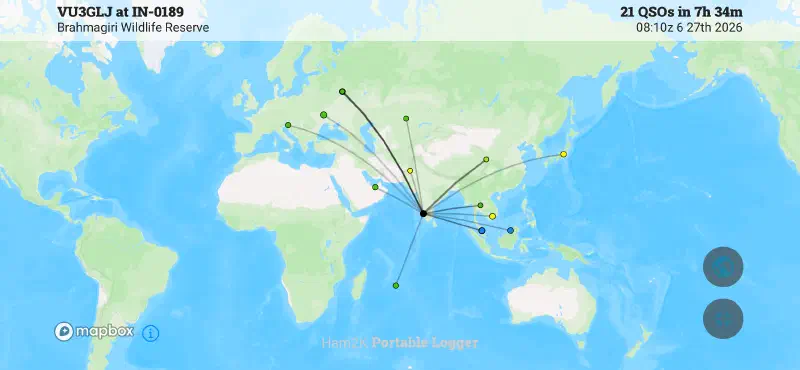
Figure 1: QSO Map from the activation attempt at IN-0189
TLDR;
Western Ghats and the parks!
This will not be as detailed a report as I had for my previous report for my first POTA, this was an unplanned trip and therefore a very quick report. I do love the flora and fauna in the Western Ghats2. I realised only about a week earlier that I would possibly be visiting these parts yet again. I wasn’t sure about the agenda or the duration, so wasn’t sure if carrying my QRP back-pack will make sense.
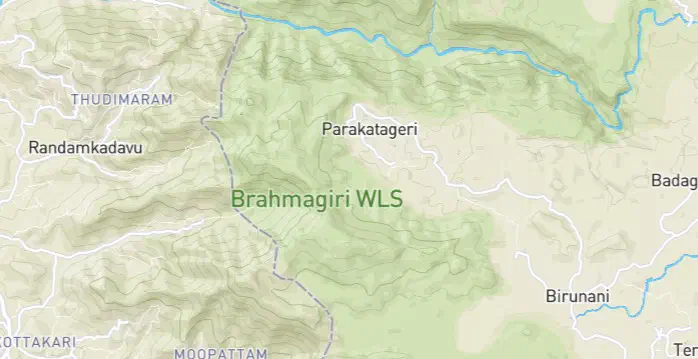
Figure 2: Brahmagiri Wildife Sanctuary in the Western Ghats
Co-incidence much?
The dates coincided with ARSI QRP-DAY Contest 2026 and as is the case with the Western Ghats, one is never far away from a national park/wildlife reserve/reserved forest.
Possible POTA
I realised I would be staying within a stone’s throw away (literally and not figuratively here), and reached out to VU3XRY to the list of parks as it was missing. He added it almost immediately and then I announced the activation of the park. Though I wasn’t sure if I would be able to deploy the antenna given the uncertain nature of the agenda on the trip.
ARSI QRP-Day Contest 2026
The ARSI team notified in local WhatsApp groups about the contest, and I was fairly excited about the possibility. I reached out to VU2YUU and VU25EE who clarified the questions I had and encouraged me to participate in the contest. The rules seemed fairly simple and I thought it might be fun to participate and get my feet wet in “contesting”. I hadn’t put in much effort in preparation for the contest either.
Field operations
Joy of the monsoons
It rained, and rained and rained! And I didn’t mind it much, we hiked in the rain, spent a bunch of time around the streams, walked around in the Shola grasslands, and just enjoyed the wet weather. If we were in ancient times, middle-ages or the Victorian times, people who see me after the trip would have assumed I was treated by bloodletting3. I wasn’t even sure if I would ever be able to put up the antenna given the weather conditions. Please do not be fooled by the photo of the place below, this hurriedly was shot by one of the group members when there was an unpredictable pause between the rains. The sky quickly turned dark and rained for another few hours well into the night. It was unfortunate to hear that there was a reduction in rains in this region too, I was told that the locals estimated almost a 50% reduction in rains this year due to climate change.
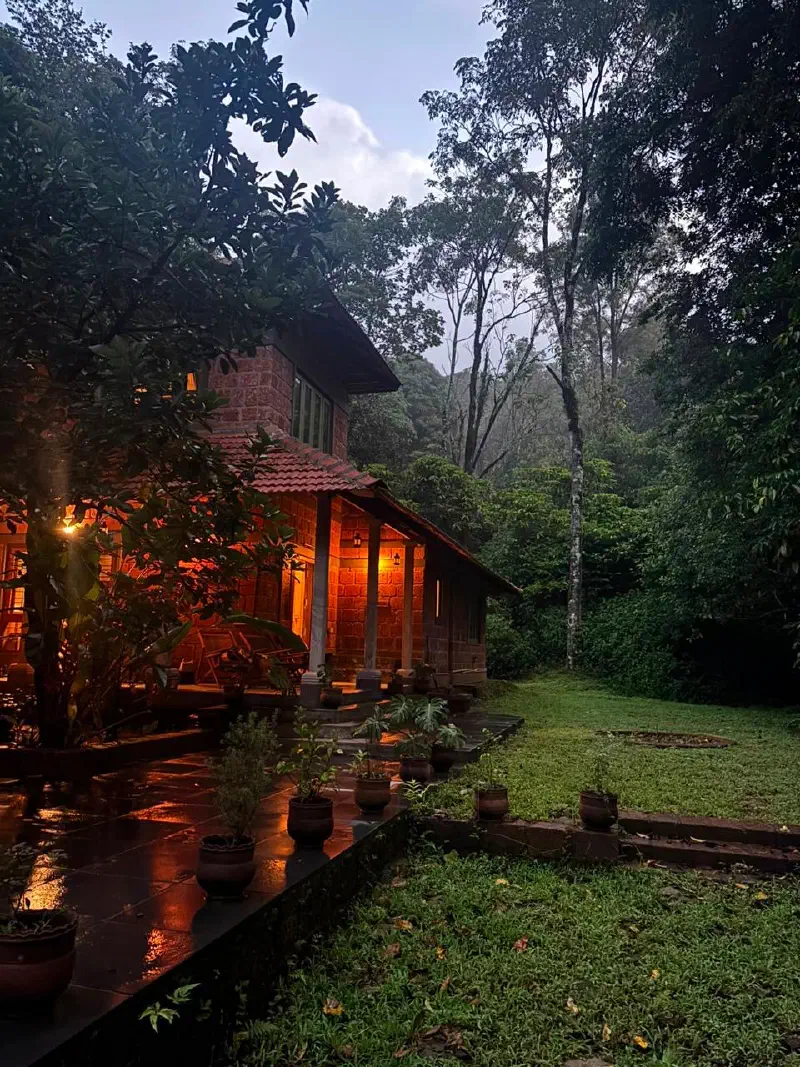
Figure 3: Lovely little location in the mountains (PC: One of the group members)
Operations
I learned that the agenda for the three day trip was packed with hikes into the mountains (maybe the apt description would be hikes around the mountains!) a day before heading out, and that was definitely exciting to hear. Which also meant that it was only an off-chance to deploy and get on the air. However, I did back my bags as quickly as possible with a smaller version of the back-pack that would also mean not lugging a lot of weight while hiking.
Version 2 of the go bag
In the previous post, I had detailed my idea of a back-pack version to carry with me to the field. Since this was a completely unplanned field operation, I tried to carry only the minimal set of items for this trip. The bag had the following set of items:
- zBitx
- QRP EFHW (with a fishing spool for the radiating element)
- NanoVNA-H
- Anker 20,000 mAh N20 and USB C to DC cable
- Para-cord (20m) X2
- Nylon rope (25m) X2
- Connectors & adaptors
- RG-316 (5m)
This meant that the weight drops down to approximately 1.5kg in a water-proof bag as opposed to the 5.5kg. I also decided to not worry about field testing QRPickle as I had been told that there is absolutely no mobile network in the region.
Deployment
Yet another coincidence on the trip was a break in the agenda just as the rains ceased. I decided to attempt hoisting up the EFHW; however, finding a suitable spot proved to be yet another challenge. This time it wasn’t a lack of trees or open enough area for an EFHW, but mostly finding a spot that wasn’t in a wildlife path (this was a designated elephant corridor, and camera traps had caught leopards and a bunch of other animals the previous week). I also needed to find a tree that didn’t have orchids all over it, a tree that did not have those beautiful ant nests, and a spot that didn’t interfere with any thoroughfare for other humans. And once again, the hoisting of the antenna became a community project. My XYL/XYP, one curious teenager, his precocious sibling and parents, two weary children, the friendly local dog, and a couple of folks at the venue all became involved in the process. We only succeeded (by that, I mean without disturbing or even touching any orchids or ant nests) because of the skill of one of the folks at the venue.
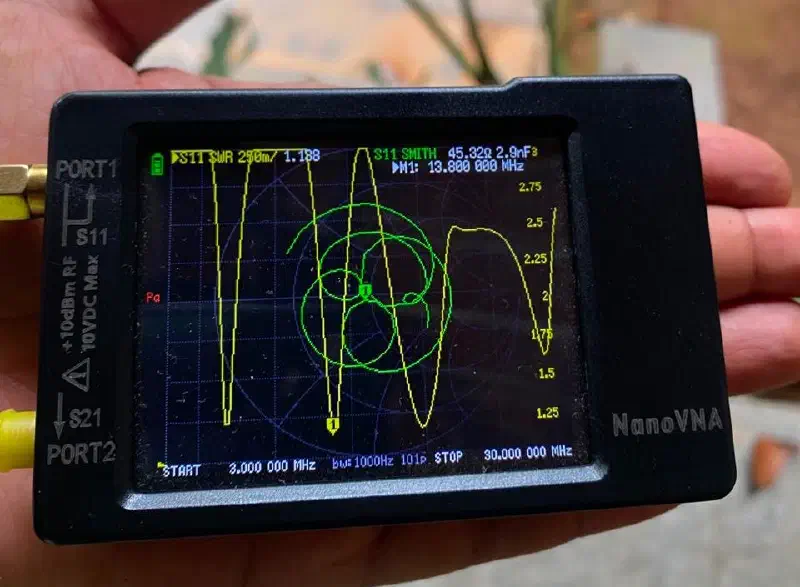
Figure 4: SWR and Smith Chart for the QRP EFHW
In my excitement that the EFHW was finally up, I forgot to take pictures or a video of the antenna and the orientation, and instead quickly measured what it would do and checked out the SWR and the Smith chart for it. IT was exciting to see the results and I quickly connected the radio!
QSO!
The joy of connecting the zBitx to the power bank and then seeing the screen light up with FT8 signals even in the cloudy, rainy weather was as sweet as the sights on the trails! My feeble QRP (2W to 5W) signals made it all the way to Japan, Australia, South Africa, Poland, and England. I switched between 15m, 17m, 20m, and 40m during the small rain gaps and this was the first time that 40m had the least propagation. I barely heard the SSB nets and I thought it was something to do with my deployment or region. However, hearing from other HAMs (later in the day when I had network in another spot) that they had a horrible time with QRP operations and it was unfavourable for all of them, gave me pause to consider that it wasn’t a bad spot or deployment. I wasn’t sure if would even be able to activate the park, as I had to disconnect and reconnect the radio multiple times as the rain and agenda played hide and seek with me.
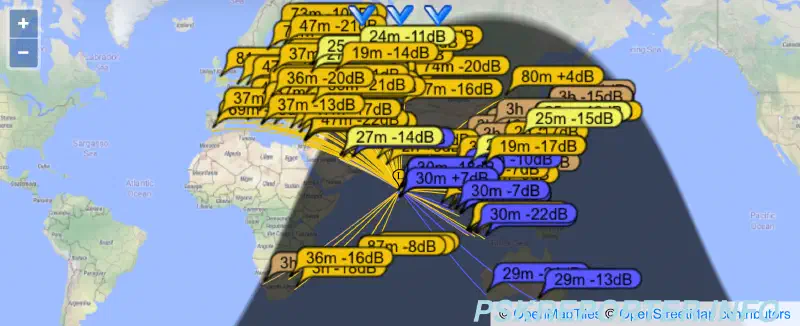
Figure 5: PSKReporter Tx on zBitx at IN-0189
Successful activation and entry to QRP contest.
We finally succeeded in activating the park! This was surprising and strange, though the signal strength ad Wx conditions meant it was all FT8 and not SSB. I had really hoped to make some SSB contacts this time around as I was prepared for it, but I barely heard the HF nets like I mentioned on my QRP setup and even the loud and booming Indonesian frequencies weren’t clear and neither was the standard broadcast that is often heard at 40m just outside the bands. I was reminded that from the possibility of no operations to the state of a successful activation of the park is a joyous occasion in itself. And it was a joy, as I was the first person to activate this park too!
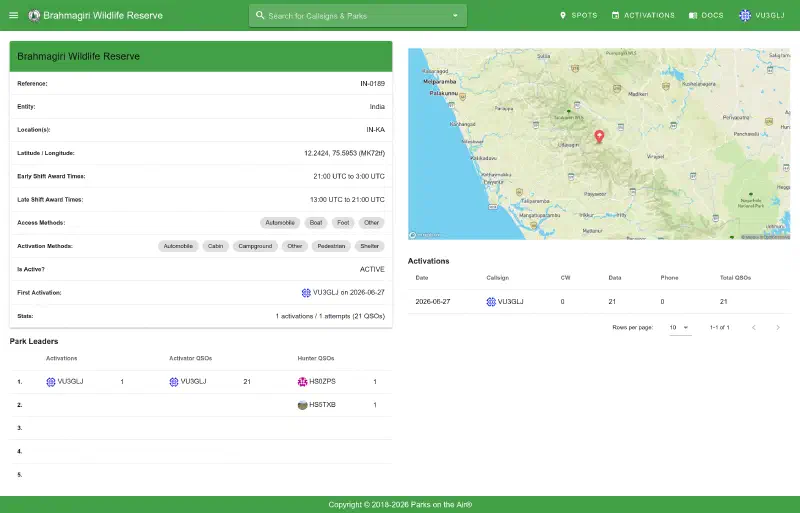
Figure 6: POTA was a success!
Given that the zBitx does come with a logger, I could have waited until I returned to export the logs and upload them to POTA.app. But since I have switched to using HAM2K Portable Logger in the field, I was able to create the logs as I made contacts, export the ADI file and then when I was in a spot with some network, upload them to POTA.app4. I’ve also been encouraged to submit my 20 eligible entries (the eligible bands are 40m, 20m, 15m, and 10m) for the ARSI QRP-Day contest, which I plan to send in as a measure of participation this time around.
Bonus
Leeches! The birds that were spotted even with the incessant rains and the complete cloud cover were the Malabar Flameback, Malabar Starling, Malabar Whistling-Thrush, Malabar Woodshrike, Indian Silverbill, Indian Gray Hornbill, Crimson-backed Sunbird, Purple Sunbird, Small Minivet, Brown-capped Pygmy Woodpecker, White-cheeked Barbet, Gray-breasted Prinia, Scaly-breasted Munia, Orange-headed Thrush, Greater Racket-tailed Drongo, Black-headed Ibis, Little Egret, Oriental Darter, and a bunch of other birds that I really couldn’t really identify with my limited skills.
Things to do before the next operation
- Prepare a checklist to enquire/request before I reach the spot!5
- Have a physical checklist of things I need to do when deploying,
- Photos/videos of the deployment
- Orientation of the antenna
- Walk-through of the deployment
- Use an SD card on the nanoVNA6
- Waterproof photography: Does it even make sense as a documentation effort to carry a small waterproof camera that possibly has GPS enabled? Given that I won’t have network in most places that I travel to and given weather conditions, I do not fancy depending on the phone as a means to document things.
- Investigate the possibility of a live-stream: Given that hoisting the antenna and making contacts turned into a group activity here too, it might be useful to live-stream the “fun” of field operations and how kids are the most excitable in these spaces and activities. Does planning for live-streaming make sense when many places I would be going to will not have any network?
Please check https://docs.pota.app/docs/activator_reference/activator_guide-english.html (Last accessed on Wednesday, 08 Jul 2026) for all POTA related rules to activate park, and please follow all the rules of the local parks. ↩︎
The history of the place, all the way from Gondwanaland, to the fact that it is responsible for a lot of the water and weather in the Deccan plateau has always fascinated me. Do check out the details at https://worldheritageoutlook.iucn.org/explore-sites/western-ghats (Last accessed on Monday, 29 Jun 2026). ↩︎
Do see https://en.wikipedia.org/wiki/Bloodletting (Last accessed on Monday, 29 Jun 2026) for some information on it, apparently it is making a comeback in “scientific manner” now. ↩︎
If you are on iOS, please use the Zoomable browser, this allows you to use the “Desktop” version of the site, which is a pre-requisite to upload logs on the site. ↩︎
This was an impromptu trip that I barely had time to request addition of the park, so maybe having a check-list for me to enquire at the property might be useful. ↩︎
I’ve tried multiple SD cards on the nanoVNA, but only get the message that writing to the SD card failed. I have to fix this issue in order to make sure I have a good way to take screenshots, load firmware, save settings, etc. ↩︎