Yet another accidental POTA
#pota #zbitx #vertical #bananthimari #efhw #qrp #ssb #field-ops #triplog
Reading time: 12 minutesLoading Park Info...
MK82qn| # | Callsign | Band | Mode | Sent/Rcvd | Date/Time | Grid (Loc) |
|---|
Yet another accidental activation, the TLDR; version:
- Getting the park onto POTA.app
- Back-pack for the trip
- Validating my check-lists!
- Activation and details
- Testing the vertical
Bananthimari forest
“ಬಾಣಂತಿ” (Bananthi) translates to a mother of a newborn, and “ಮಾರಿ” (Maari) refers to the local deity/goddess called “Maariamma”. While this could refer to a practice of praying to the deity/spirit/goddess for a plentiful harvest and good weather, locals often speak about the shrine on the hills as a place for worship for those who wish to have children. Although this is a designated state forest, it is a fairly arid/semi-arid region, and has been subject to substantial granite quarrying in recent times. In addition, there have been numerous sightings of multiple leopards in the region1 in the recent past.
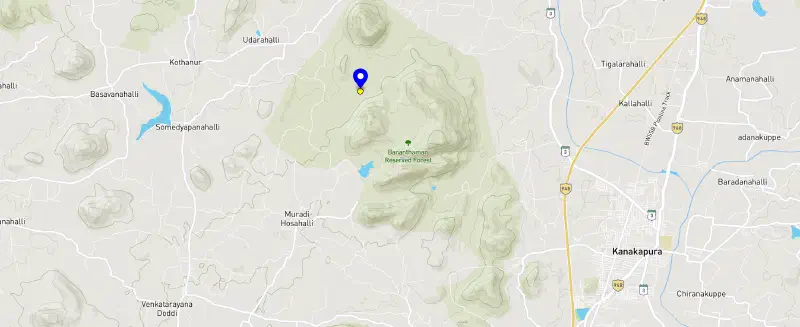
Figure 1: Location of Bananthimari forest
Due to a combination of factors, I did not know about the actual location of my stay for mQTH obligations around the region2. When I did finally come to know about it, it did feel like jumping through a few hoops to finally be able to get confirmation that I would be able to deploy an antenna in the forest for an activation attempt. I spoke with a chain of people such as the friend of a friend of a friend of the forest guard’s boss! The conversation was as convoluted as it could get, but given the lack of awareness about amateur radio operations in VU land, it is the price we pay. I had barely four days before I was to head out when I reached out to the India POTA admins (VU3XRY), and so we now have Bananthimari State Forest as IN-0194 on pota.app. The short turnaround time meant that I did not announce the activation ahead of schedule on pota.app, or setup notification mechanisms through SOTAmat.
Packing for the trip
Based on my last trip’s challenges, I wanted to do the following before I head out into the field:
- nanoVNA SD card usage
- SSB mic for the zBitx
- Have an alternate for the vertical mast
nanoVNA and SD card shenanigans
Remember my horrible photos of the SWR readings or the Smith Charts on the nanoVNA in my previous posts? It was becoming hard for me to make sense of them myself when trying to understand what was happening when I am back from a trip. I finally found a way to take much cleaner screenshots on the nanoVNA using a very very old class 6 SD card from a Nokia Symbian device that I had. I managed to upgrade the firmware on the nanoVNA from 1.1.01 (it came loaded with this version) to 1.2.46. The instructions available in the repository are precise and simple to follow. I do recommend updating your firmware3 on your nanoVNA, the repository has firmware for NanoVNA, NanoVNA-H, and NanoVNA-H4. Please do check the groups.io page for more tips and tricks4.
What goes in the bag this time around?
The bag is definitely getting smaller and better!
- Rig: zBitx, and QRP Mic was courtesy of VU3GWN. Given my travails with the mic for the zBitx, I was unsure if it makes sense to attempt SSB as I had limited time this time around.
- Power: Anker 20,000 mAh N20 with USB C to DC cable
- Antennas: I opted to carry my EFHW and wanted to actually test the vertical in this trip as well. For the vertical, I decided to get myself the compact Decathlon’s Caperlan telscopic fishing rod5 (it folds into a nice compact size of 60cm).
- Test Equipment: nanoVNA
- Misc.: Guying ropes, tent pegs, rope for anchoring EFHW
Did my check-lists work?
Yes, yes and yes! Please create your own check-lists in case the check-lists I have created for myself don’t work for you.
The license in the new format and printed out in a plastic card format was extremely helpful this time around. Just flashing the card with guards and locals really helped keep away any antagonism and suspicion6.
Deployment
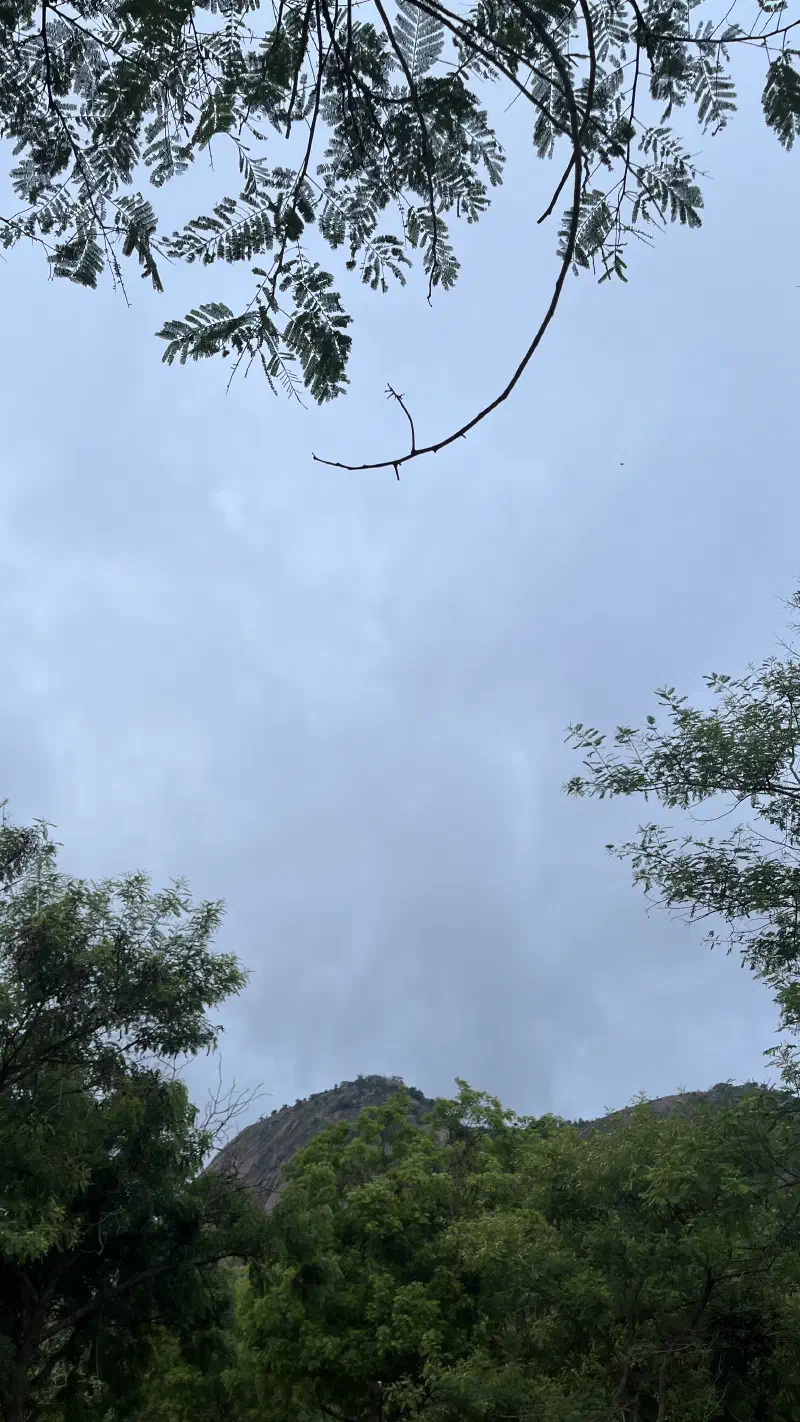
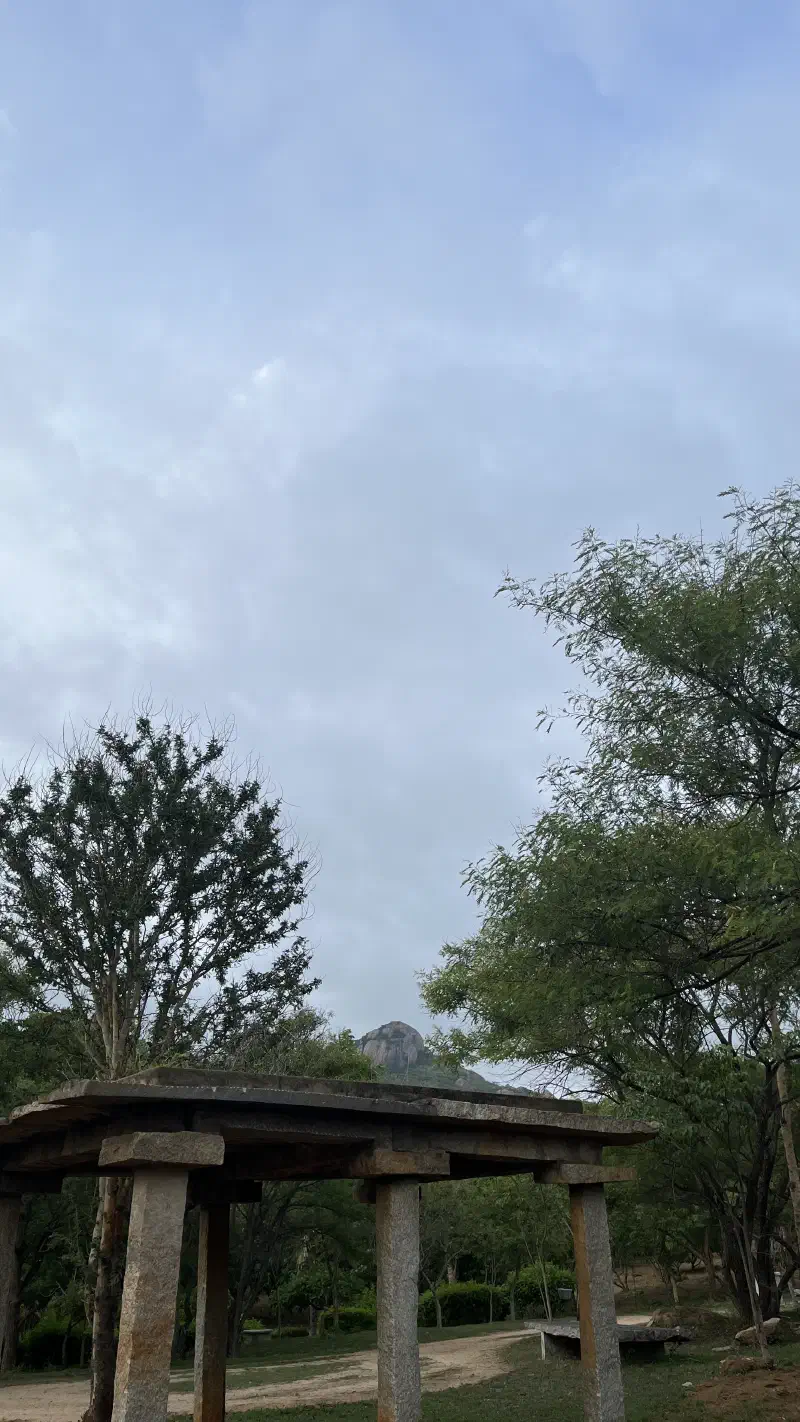
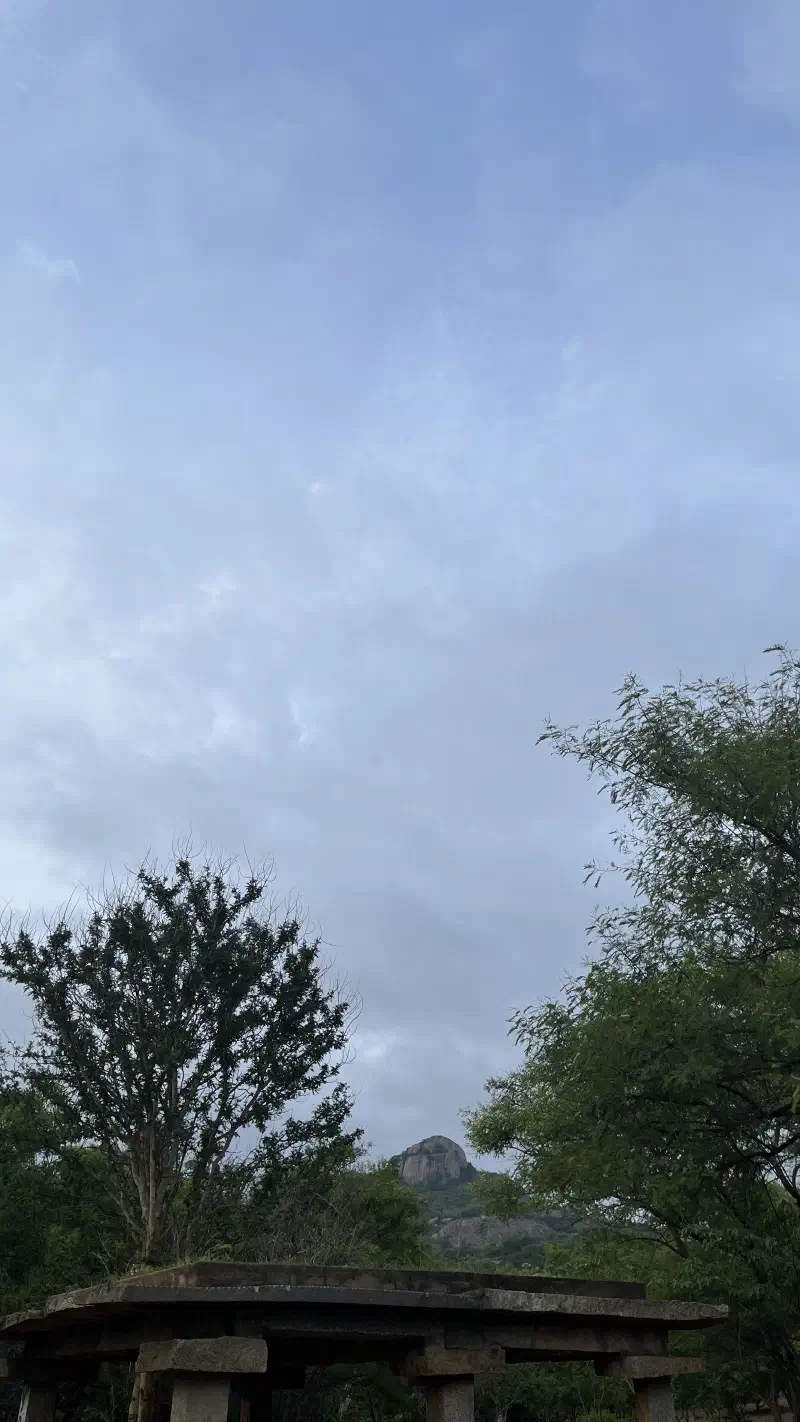
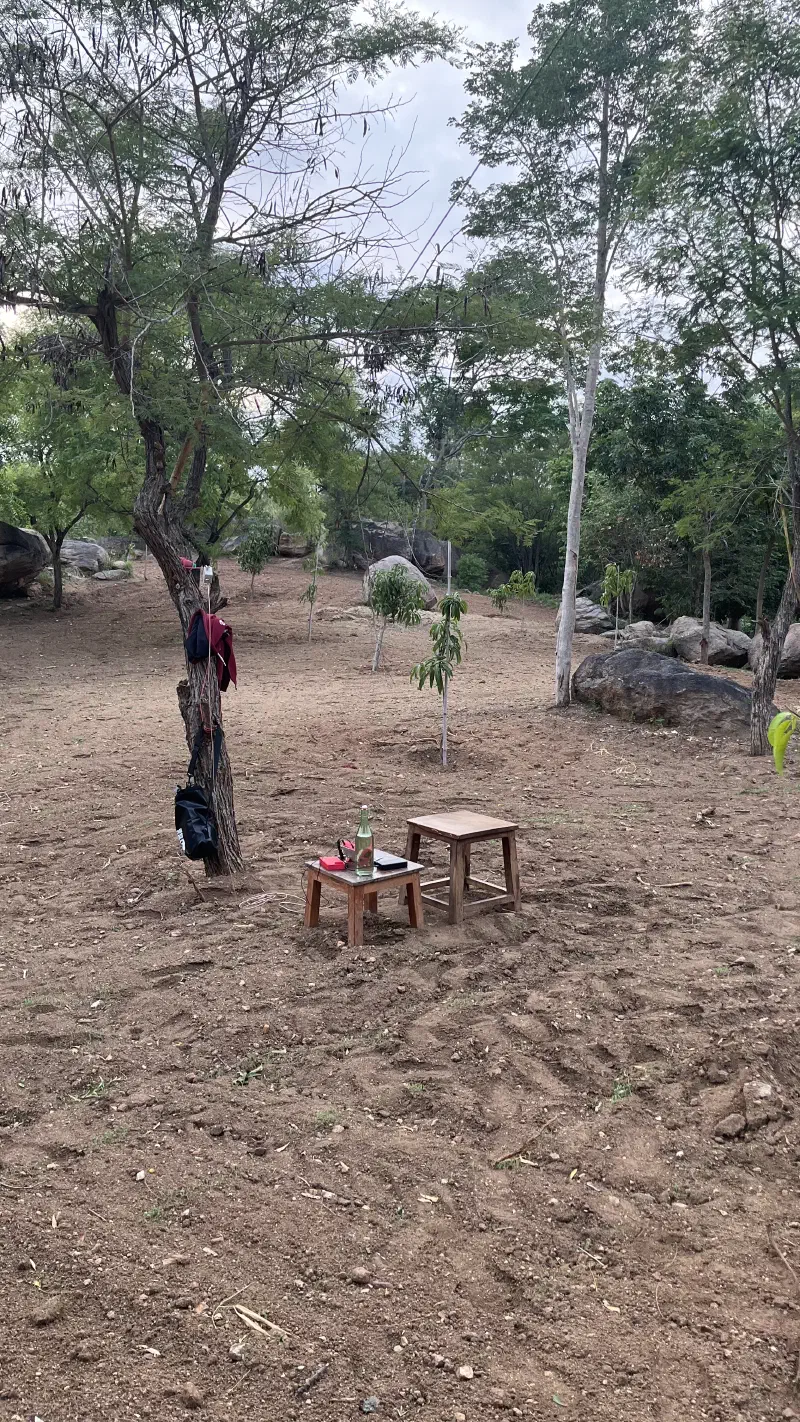
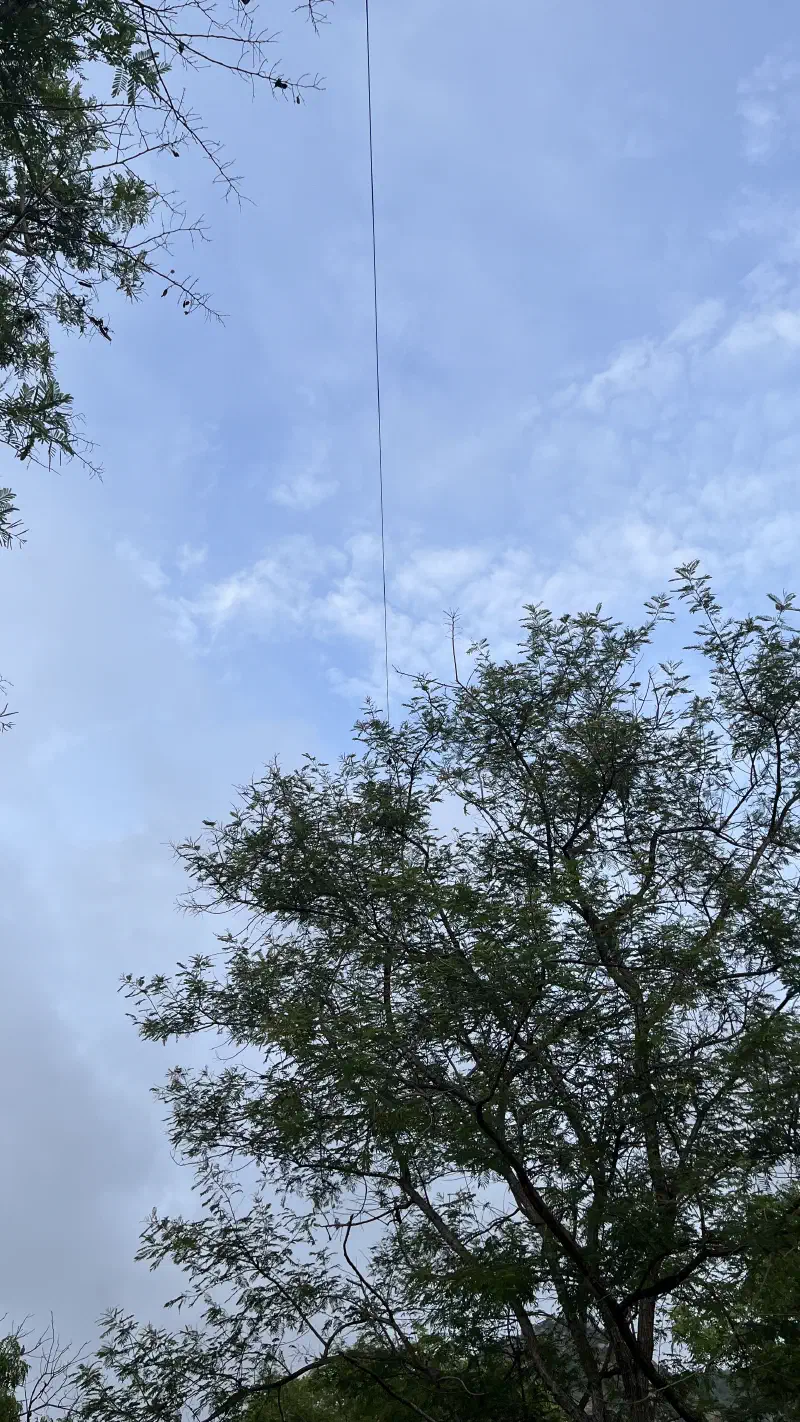
Photos from the chosen site and deployment of the EFHW at IN-0194
Challenges
- mQTH: Work schedules meant that the possibility of scoping out places and getting the antenna up quickly wasn’t a possibility. I had to relocate from the first choice which was about 100 feet from my location to about a 10 minute walk from my site. The schedule also meant I had about an hour or so in the mornings and possibly an hour or so in the evening.
- Leopard sightings: There were multiple sightings of leopard(s) in my final chosen site for the station. This also meant that I had limited operation time. There were two instances were the forest officers on rounds waited for me to pack up and leave the location.
- Terrain issues: As mentioned earlier, the region is arid or semi-arid, so there aren’t a lot of tall trees to get the EFHW up, so this site would have been an ideal choice for a vertical to be used.
- Birds! This was a first for me, I guess when we are in a region where tall trees scant, and wires even “rarer”, we will have to account for birds on the antenna. There were multiple instances of my signal reports fluctuating within a span of a couple of minutes, and I was puzzled. I finally figured out the only variable that had changed was the presence of our friendly babblers, crows and the Indian Roller on the wire. I do need to figure out if the 5W transmission isn’t enough to cause the birds an RF burn.
- Phone connectivity: The possibility of live streaming and checking my own transmission was out of the question as the region had little to no cellular connectivity7.
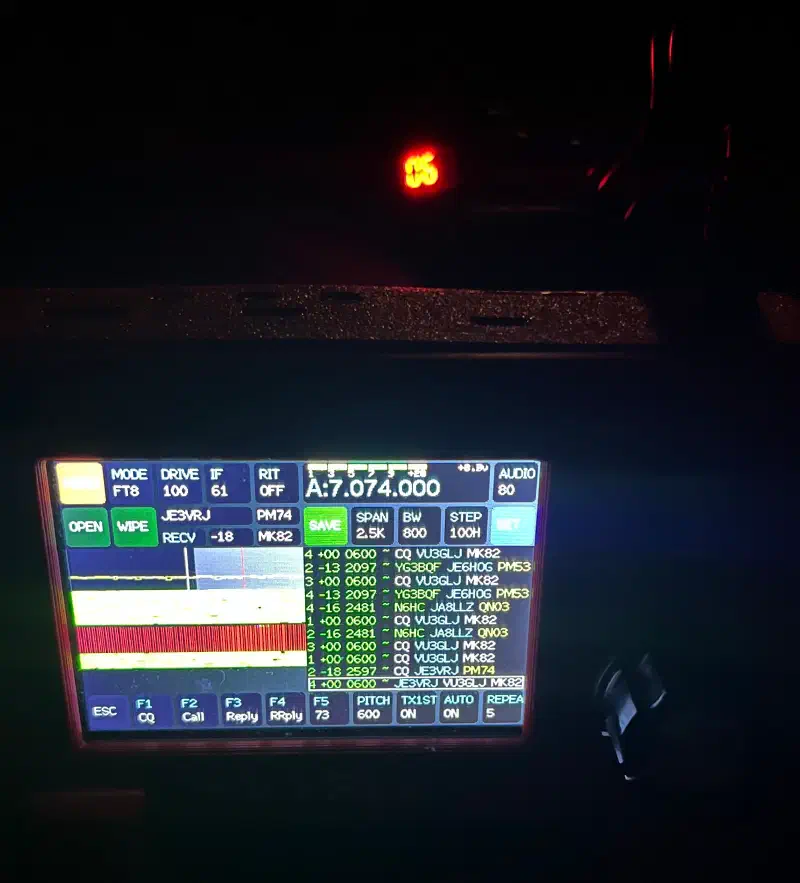
Figure 2: The station goes online in horrible conditions!
I was finally able to get the antenna up on site, with dying light, and quickly check if I was able to Rx anything at all with the deployment. And it did seem like I might be able to activate the park. I did however have to stop given the leopard in the neighbourhood.
Antenna
This time, I made sure I took a couple of pictures of the location, orientation and the station setup.
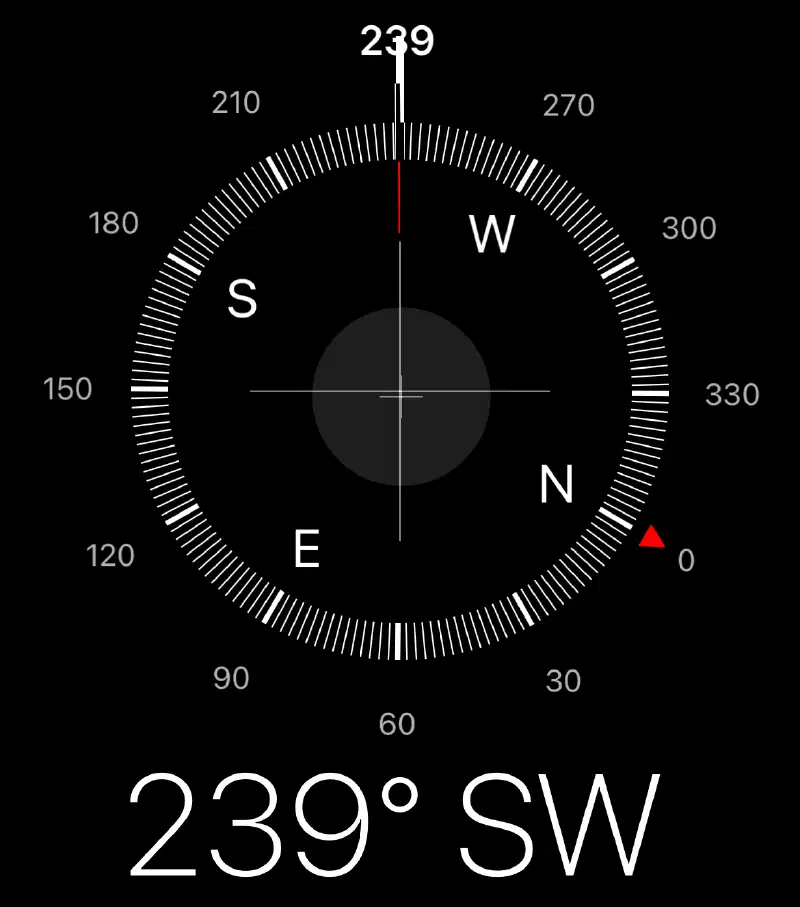
Figure 3: Orientation of the EFHW at the site
I did want to try a East-West orientation for the antenna to see if something changes, but as you can see from the screenshot the orientation, it wasn’t to be. Th elevation was roughly 670m on the site. The interesting outcome though was the low SWR at 7.050Mhz for me to work with.
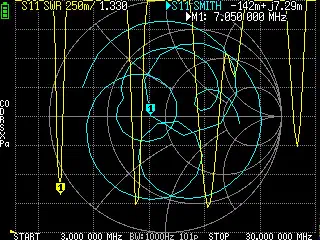
Figure 4: Smith Chart and SWR readings for the EFHW deployed on-site
Activation
As I mentioned earlier, the short operational window also meant that I wasn’t sure if I can actually get to make any contacts, let alone activate the park. So I had changed my objectives for the deployment from activation to attempting to test the vertical. However, thanks to the active QRP and POTA community in India, I was lucky enough to activate the park. It was a special activation for me as I was able to do my first SSB heavy activation from the park.
I had originally planned to camp at 7.055Mhz as it was empty and closest to my best SWR on the antenna deployment. I sent out a message on WhatsApp to the groups, but in a couple of minutes it was occupied by rag chewers or a local net(?). By the time I received the message from VU3TBU warning me about it, I had moved to 7.065Mhz. There was additional chatter on 7.070Mhz and 7.120Mhz, I need to figure out high traffic frequencies and make note of them before I head out into the field.
It was great to hear folks on SSB, the issue with the bird happened while I was exchanging reports with VU3WAW, VU2UCR and VU3FXE! In case schedules had worked out, it would have been great to attempt a park to park with VU2UCR.
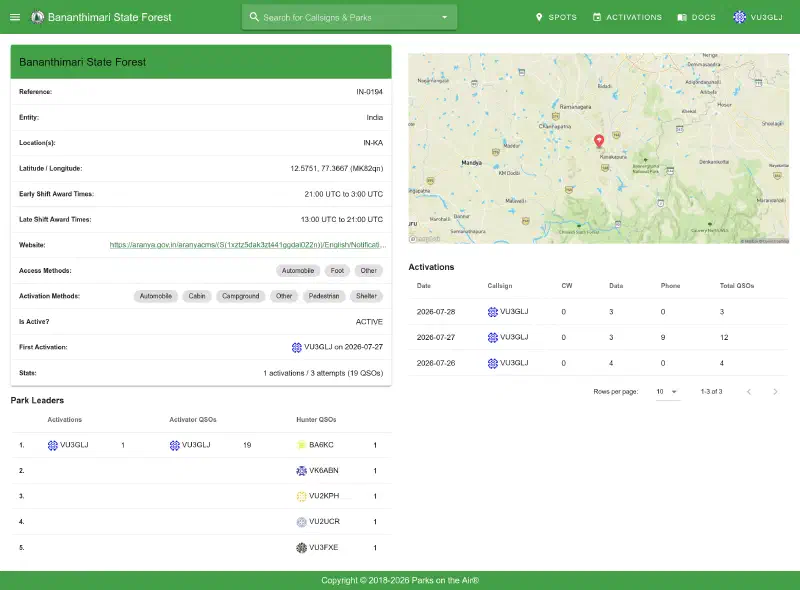
Figure 5: Deploying the vertical on-site for testing
As you can see in the pota.app screenshot, I was only able to make 3 and 4 contacts on the first and third day of operations. The second day was a great day for me as I had 9 SSB contacts, and checked in to the HF Net on 7.150Mhz! I wasn’t able to make any contacts on two other days that I was at the park due to my work schedule.
And here is a snippet of the HF audio being heard on the zBitx from the park.
Listen to the HF Net clip Rxed from IN-0194
I was receiving folks from Kerala, Karnataka, Tamil Nadu and even further up north (I think I was able to hear someone from Delhi and West Bengal too on the 40m band) loud and clear actually. In addition, there was chatter that I could hear from Indonesia loud and clear too. The usual transmissions at 7.210Mhz to 7.225Mhz was booming!
Testing the vertical
As I have mentioned previously, on the third day of operations, I had decided I will try and test the vertical rather than worry about more QSOs. This vertical antenna was as simple as it gets (or so I thought!), it consists of a 5m telescopic fibre glass fishing pole, the SA2CLC coil, 3D printed guying system, and 22AWG (20ft) wire for the radiating element, and a RG-358 to connect it to the radio.
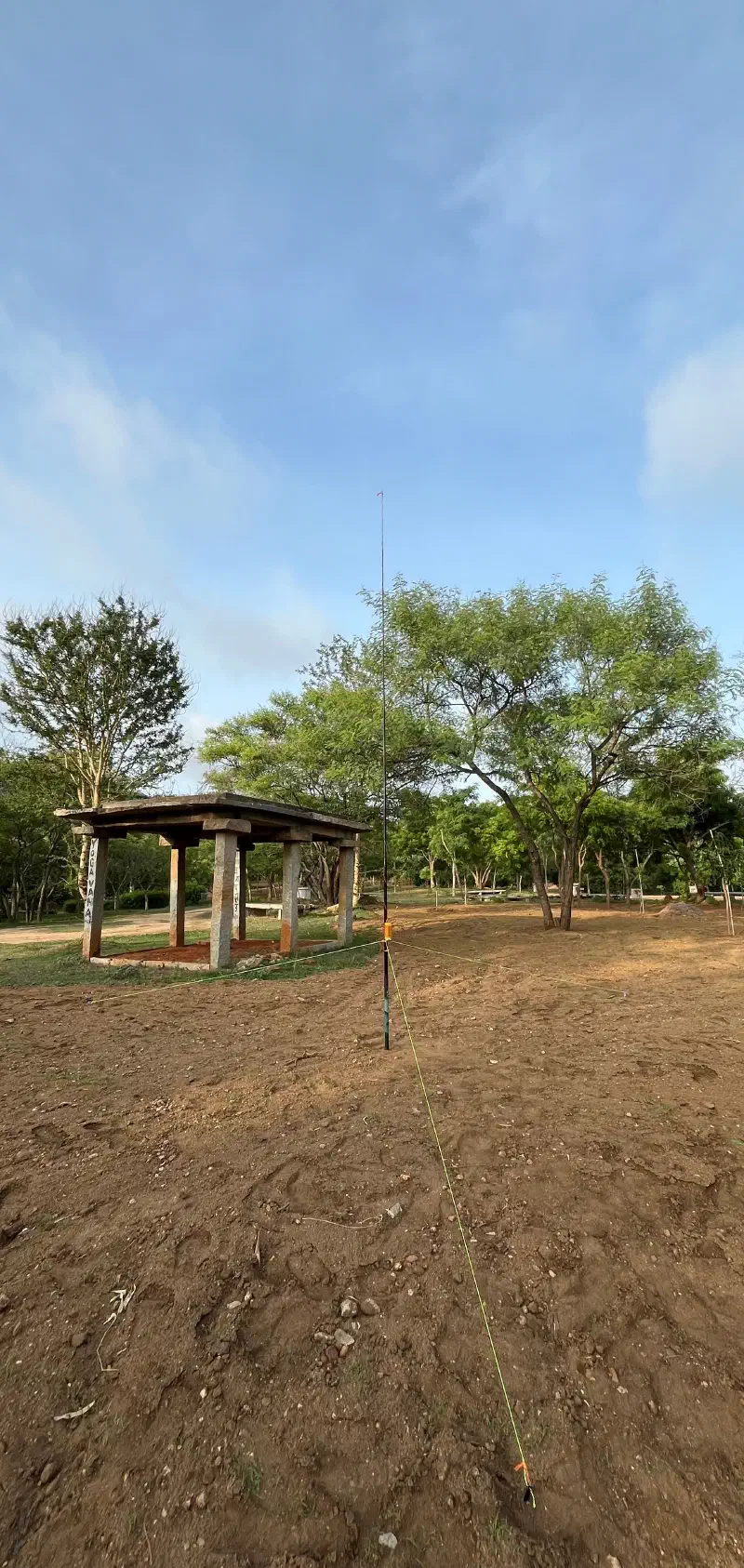
Figure 6: Deploying the vertical on-site for testing
Advantages of the vertical
- Deploying this vertical was easier than I thought!
- It took me all of 5 minutes to get the antenna up once I had all the parts configured. It was the first time I ever attempted to deploy this configuration of the vertical with tent pegs, guy wires and ground radials. Though it took me close to an hour to figure out the guying system, matching the length of the telescopic rod and wire, and matching the lengths of the guying wires for the tent pegs.
- I heard the morning net loud and clear on the 40m and SSB chatter along with FT8 on the 20m bands.
Challenges with the current design
- It was cumbersome to test the exact location for the band in the coil!
- Scraping the enamel off the copper winding to then put in the alligator clip was a challenge. Especially when the whole contraption was up and about! You can see a picture in my previous post on preparing a backpack.
- It might be better to create spacers and use the Gigaparts POTA20 mast in order to have a better height and a more sturdy coil higher up.
- The chart below gives you a good idea ofthe readings before the ground radials, the SWR dropped to 1.2 when I added the radials and the Smith Chart reading was much smoother and not this sharp.
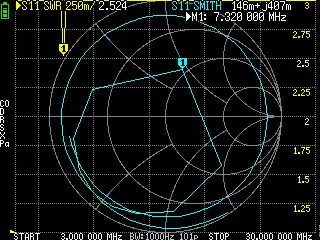
Figure 7: Smith Chart and SWR readings for the SA2CLC vertical without ground radials.
Improvements of the design for the next trip
- Check SWR and Smith Chart readings with more radials, I currently only had four radials.
- Play around with height of the coil, the coil in this deployment was roughly 60cm-75cm off the floor.
- Possibly switch from multi-band coil to three single band coils that can be hoisted up in the air!
Preparations for next time
So, SSB on a 5W device works! I was able to get signals out and speak with folks all over India while activating the park!
- Make sure I have someone recording my SSB transmission!
- Make my own QRP SSB mic for the zBitx and QMX.
- Given that I use a zBitx or either a QMX for the foreseeable future, it would be great to either home-brew an S-meter that will help me understand things better.
- Test out the vertical a bit more!
- Have a back-up SD card with different firmware for the zBitx.
- Create the dipole so I can set it up as an inverted-V.
- Test the EFHW in an inverted-V configuration
- Sync clock on the zBitx before heading out the field once more!
- Limited or no connectivity also means that I need to check and prepare for band conditions and possibly carry “hard copies of it” for different days.
- Create an updated QRPickle with GPRS modules.
- Probably spend time with the QMX and the CalyxOS loaded phone for FT8 and SSB contacts8.
At some point in the future, I would really like to plan a trip which is solely dedicated to activating a park without any other activities.
Bonus
Thank you for reading all the way through, but unfortunately, neither did I spot a leopard nor was I able to spot any birds that were new to me as mQTH commitments left very little time for other activities. Although, folks from Brazil and South Africa were curious enough about my radio deployment and were super surprised when I showed them the call signs of their country folk on the screen!
I’ve learnt now with my POTA trips that the lack of indie dogs in the neighbourhood is often a marker for the presence of leopards. ↩︎
As part of our work, it was also noted that the region was earlier heavily susceptible to poachers, local communities had been resettled from the “reserve forest” as part of the efforts as well. ↩︎
Please do remember to calibrate your nanoVNA every time you modify the firmware. ↩︎
I sincerely hope, more communities move back to mailing lists or forums. I find the use of Discord really problematic, it makes it very hard to search for information on them. ↩︎
If you remember, the joy I had of trying to deploy it with the Gigaparts POTA20 mast without realising it was carbon fibre. ↩︎
Speaking Kannada really helped, but the deep-rooted suspicion in today’s times fanned by communalism meant they were puzzled by my beard. ↩︎
It makes all the more reason to figure out APRS with transmission. ↩︎
And try the very many panadapter that are around now! ↩︎